
Women’s Group – Hearing Dogs for the Deaf
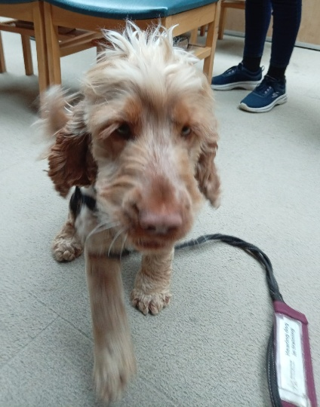
At our last Women’s Group meeting we had a rather beautiful, cute and very bouncy visitor, Richie. He’s a 15 month old cocker spaniel being trained by our guest speaker, Malcolm Board, who has been a volunteer with Hearing Dogs for the Deaf for 12 years.
It was a very informative and interesting session, and great fun watching Richie, who could hardly keep still for a few seconds! We learned that the charity uses spaniels, cockapoos, poodles and labradors who live with volunteer trainers when they are old enough to leave their mothers. They are taught by a reward system to respond to noise, and to lay down after alerting the person when there is danger, eg a smoke alarm. Once trained, they are matched with a profoundly deaf person and become their ears by responding to the door bell, smoke alarm, etc. They wake the person up in the morning when they hear the alarm clock. Many people who are profoundly deaf have mental health problems as being deaf can be extremely isolating and difficult. The dog gives the person a new confidence and a new social network as the dog needs to be walked.
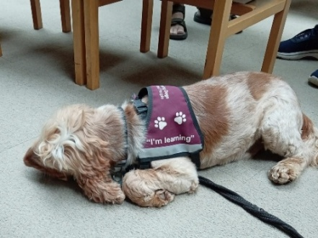
The dog wears a purple vest so it is easily noticeable that the person is deaf. The charity also provides practical and emotional services, transforming the lives of those affected. Please have a look at their website to see testimonials from deaf people who have been given a new life by having one of these clever dogs.
Some facts about hearing loss
· 1 in 6 of the UK adult population is affected by hearing loss. 8 million of these are aged 60 and over.
· 6.7 million could benefit from hearing aids but only about 2 million people use them.
· People take around 7 years to admit they are hard of hearing and seek a hearing test.
· About 900,000 people are severely or profoundly deaf.
· About 12,000 people in the UK use cochlear implants.
· Many people with hearing loss also have tinnitus which affects 1 in 10 adults. They may also have balance difficulties.
Thank you for reading, Maria B